

Inflammation
Understanding inflammation: when it protects us and when it becomes a burden

What should you know?
Inflammation is a vital defense mechanism.
Prolonged inflammation requires understanding the context.
No single food or test tells the whole story.
Inflammation is one of the central topics when we talk about longevity and healthspan. The question is not only how many years we will live, but in what quality we will reach them: will we be able to think, move, work, enjoy life, be independent and keep participating in life. The modern approach to longevity connects prevention, function, daily habits and ongoing measurement. Instead of looking for one treatment that promises everything, we look at the whole system and at the changes that can be made over time.
Inflammation is not the enemy
Inflammation is a vital response to injury and infection. It helps the body recruit cells, repair tissue and fight a harmful agent. The problem begins when inflammatory signals remain active over time without a clear need.
In longevity it is important to prefer a process you can sustain over an extreme, short-term solution. A small change repeated for months and years can be more meaningful than a perfect plan that lasts two weeks. That is why every recommendation should fit the person, their ability, their medical condition and their real life.
On a practical level, it is worth starting with a week of observation: record sleep hours, energy level, activity, meals and how well you function. You don’t need a complex app; even a simple sheet of paper can reveal patterns. Then choose one change you can measure and try it for two to four weeks.
In the context of inflammation, it is worth thinking about continuity rather than a single event. A good day or a good test does not guarantee a long-term trend, just as a weak day does not mean everything has gone wrong. When you track over weeks and months, you can identify what really works. The best decisions are usually those based on a stable foundation, personalization and repeated feedback from the body and the data.
Chronic low-grade inflammation
With age and with certain metabolic conditions, chronic low-grade inflammation may appear. It is not always felt as fever or pain, but it is linked to many biological processes. No single test tells the whole story, which is why context matters.
The right approach combines measurement with listening to the body. Numbers can help identify a trend, but they are not the person. It is worth asking how you feel, how you function, what has changed, what is easier and what is still hard. Combining data with personal experience leads to better decisions.
It is worth thinking in terms of a minimum effective dose. Instead of asking what the perfect plan is, ask what the smallest action is that you can do consistently and that will really change the situation. For one person it is a twenty-minute walk, for another two strength workouts a week, and for another going to bed earlier.
Visceral fat
Abdominal fat is not just an energy store. Visceral fat tissue is metabolically active and can affect inflammatory signaling. Reducing waist circumference and improving body composition are sometimes a more meaningful goal than chasing weight alone.
There is no need to change everything in one day. You can choose two or three high-impact habits, define them clearly and track them. Once they become routine, add another layer. That is how you build a system that lasts over time instead of relying on motivation alone.
Periodic follow-up allows the plan to be adjusted. If a measure improves but the person feels worse, we need to understand why. If you feel great but the measures are getting worse, that also needs attention. The goal is to gather enough information to make a decision, without turning life into a laboratory.
Nutrition
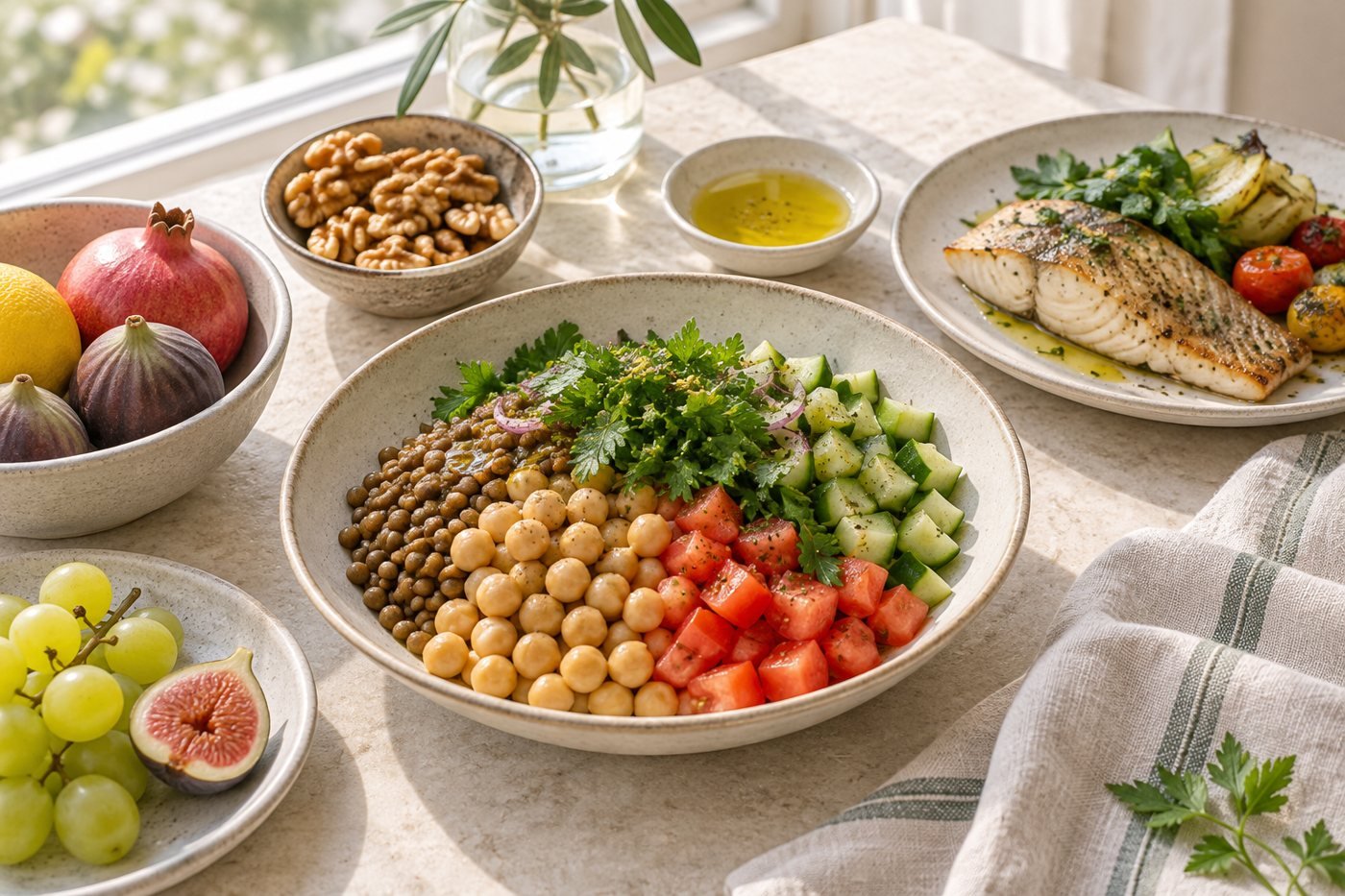
A diet rich in ultra-processed food, added sugars and trans fat does not support metabolic health. In contrast, vegetables, legumes, fruit, fish, olive oil, nuts and dietary fiber create a better foundation. No single food switches off inflammation.
It is important to distinguish between prevention and treating an existing disease. Lifestyle is a powerful foundation, but it is not a substitute for diagnosis, medication or medical treatment when they are needed. A responsible longevity program knows how to work alongside medicine and to refer for evaluation when warning signs appear.
Environment strongly influences habits. The food at home, the people we meet, the place we train, working hours and the phone next to the bed - all of these can help or get in the way. A smart change in environment reduces the need for self-discipline and makes it easier to stay consistent.
Training and the right dose
Training creates a temporary response of load and inflammation as part of adaptation. When recovery is sufficient, the long-term result can be positive. Overtraining, prolonged pain and lack of sleep may tip the balance in a less favorable direction.
The connection between areas is a central part of the picture. Good sleep makes training easier, training improves insulin sensitivity, good nutrition supports recovery, and social connections support consistency. When several factors are combined, the result is sometimes greater than working on a single measure.
When there is pain, a chronic disease or medication, the pace and load need to be adjusted. Sometimes the right step is actually to start more slowly, get a professional assessment and build confidence. A plan that respects limitations can be more effective than an aggressive plan that leads to stopping.
Sleep and stress
Poor sleep and chronic stress affect hormonal and immune systems. A person can eat very well and still feel worn out if they sleep five hours a night. That is why addressing inflammation must involve multiple systems.
Age is also not a reason to give up on improvement. The body keeps its ability to adapt throughout life, even if the rate of progress changes. The right training, nutrition, sleep and learning can improve function even at an older age. The question is not whether progress is possible, but what the starting point is and what the right pace is.
Oral health
Gum inflammation and chronic infections in the mouth can be a significant source of load. Dental check-ups, hygiene and treating gum problems are part of preventive medicine and are sometimes forgotten in discussions about longevity.
Laboratory tests
Markers such as CRP can provide information in a certain context, but they are not a diagnosis in themselves. An abnormal result can stem from infection, injury, chronic disease or other factors. Tests should always be interpreted together with symptoms, history and trend.
Supplements and medicinal herbs
Omega-3, curcumin and various herbs are being studied in the context of inflammation, but the quality of evidence and the doses vary. Supplements can interact with medications. Thoughtful use starts with the question of what you want to achieve and what is already known about the person.
The goal is to reduce the load
Instead of trying to lower a single number, it is worth thinking about cumulative load: sleep, abdominal fat, activity, smoking, oral health, stress and chronic disease. When the load decreases on several fronts at once, the body gets better conditions for recovery.
How to build a personal plan
A personal plan for inflammation starts with defining a clear goal. It is not enough to say 'I want to be healthy'. It is better to define what you want to improve: energy in the afternoon, the ability to climb stairs without stopping, focus at work, range of motion, uninterrupted sleep or a specific medical measure. A clear goal makes it possible to choose the right tools and check whether you are really making progress.
Next, we build a picture of the current situation: medical history, medications, relevant blood tests, sleep, nutrition, activity, pain, emotional state and family risk factors. There is no need to turn every person into a complex medical project, but it is important to know what already exists and what needs attention. A good foundation prevents unnecessary trial and error.
The next stage is prioritizing. It is usually right to start with the factors that offer the highest return: sleep, movement, strength, nutrition, metabolic balance and reducing smoking or excessive alcohol. Only once the foundation is in place can more advanced tools be considered. This approach is both more economical and easier to sustain.
Finally, a re-check point is set. Longevity is not a project with an end date but a system that is built and updated. The body changes, goals change and life changes. That is why a good plan includes a simple mechanism of checking, learning and adjusting - without drama and without changing direction every week.
The right approach combines measurement with listening to the body.

What you can do this week
Choose one measure that you can track simply, and record it for seven days. It could be hours of sleep, number of steps, strength workouts, walking time, energy level or pain. The goal is to create a real starting point.
Schedule two fixed health actions in your calendar for the coming week instead of relying on free time. When an action gets a place in your schedule, the chance that it happens rises significantly.
Choose one change in your environment: prepare your workout clothes in advance, move the phone away from the bed, add vegetables and protein to your first meal, or schedule a walk with someone else. A small environmental change can be stronger than a big decision.
Decide in advance what will count as success. Success is not perfection. If the goal is three workouts and you did two, that is still progress. The goal is to build a streak that accumulates over time.
The Manheim Longevity Center approach
At Manheim Longevity Center we see longevity as a personal process that connects measurement, prevention, movement, nutrition, sleep, mental health, Chinese medicine, supplements as needed and community. The goal is not to promise eternal life, but to help people increase their chances of living more years in health, independence and high function.
A practical perspective
When focusing on inflammation, one of the most common mistakes is trying to change too many things at once. A more effective way is to choose one action, measure your ability to carry it out and check what happened after a few weeks. Then you can add another layer. This creates progress based on personal experience rather than momentary enthusiasm. It is also important to leave room for enjoyment: a plan that does not suit your personality, your family and your work routine will not last. The more natural the habits become, the less conscious effort they require. In the end, this is exactly the idea of practical longevity - building a life system in which the healthy choice becomes the easy, normal choice.
Frequently Asked Questions
Is all inflammation harmful?
No. Acute inflammation is a natural part of the body’s defence and healing response, for example after an injury or infection. Persistent inflammation, on the other hand, may be associated with various medical conditions. It is important to distinguish between types of inflammation and their causes, and not to try to suppress every inflammatory response without a diagnosis.
Is a CRP test enough?
No. CRP is a non-specific marker that may rise with inflammation and infection, but on its own it does not identify the source of the problem and does not diagnose a specific disease. A normal result also does not rule out every medical condition. Interpreting the test depends on symptoms, the clinical examination and additional measures as needed.
The information in this article is general and does not replace personal medical advice, diagnosis or treatment. People with underlying conditions, new symptoms or who take medication should consult an appropriate professional before making significant changes to their diet, training or supplements.