
Independence & Function
The real test of longevity: continuing to do the things that matter to us

What should you know?
Functional independence includes the ability to carry out everyday activities safely, such as getting up, walking, bathing and shopping.
Strength, balance, vision, hearing and a safe living environment affect the ability to maintain independence.
A new difficulty in function or repeated falls warrant a professional assessment.
Independence and function is one of the central topics when we talk about longevity and healthspan. The question is not only how many years we will live, but in what quality we will reach them: will we be able to think, move, work, enjoy life, be independent and keep participating in life. The modern approach to longevity connects prevention, function, daily habits and ongoing measurement. Instead of looking for one treatment that promises everything, we look at the whole system and at the changes that can be made over time.
Independence is a central goal
Many people fear not only the number of years but losing the ability to manage an independent life. Getting dressed, driving, climbing stairs, traveling and meeting friends are real measures of success. Longevity should preserve these abilities as early as possible.
In longevity it is important to prefer a process you can sustain over an extreme, short-term solution. A small change repeated for months and years can be more meaningful than a perfect plan that lasts two weeks. That is why every recommendation should fit the person, their ability, their medical condition and their real life.
On a practical level, it is worth starting with a week of observation: record sleep hours, energy level, activity, meals and how well you function. You don’t need a complex app; even a simple sheet of paper can reveal patterns. Then choose one change you can measure and try it for two to four weeks.
In the context of independence and function, it is worth thinking about continuity rather than a single event. A good day or a good test does not guarantee a long-term trend, just as a weak day does not mean everything has gone wrong. When you track over weeks and months, you can identify what really works. The best decisions are usually those based on a stable foundation, personalization and repeated feedback from the body and the data.
Functional reserve
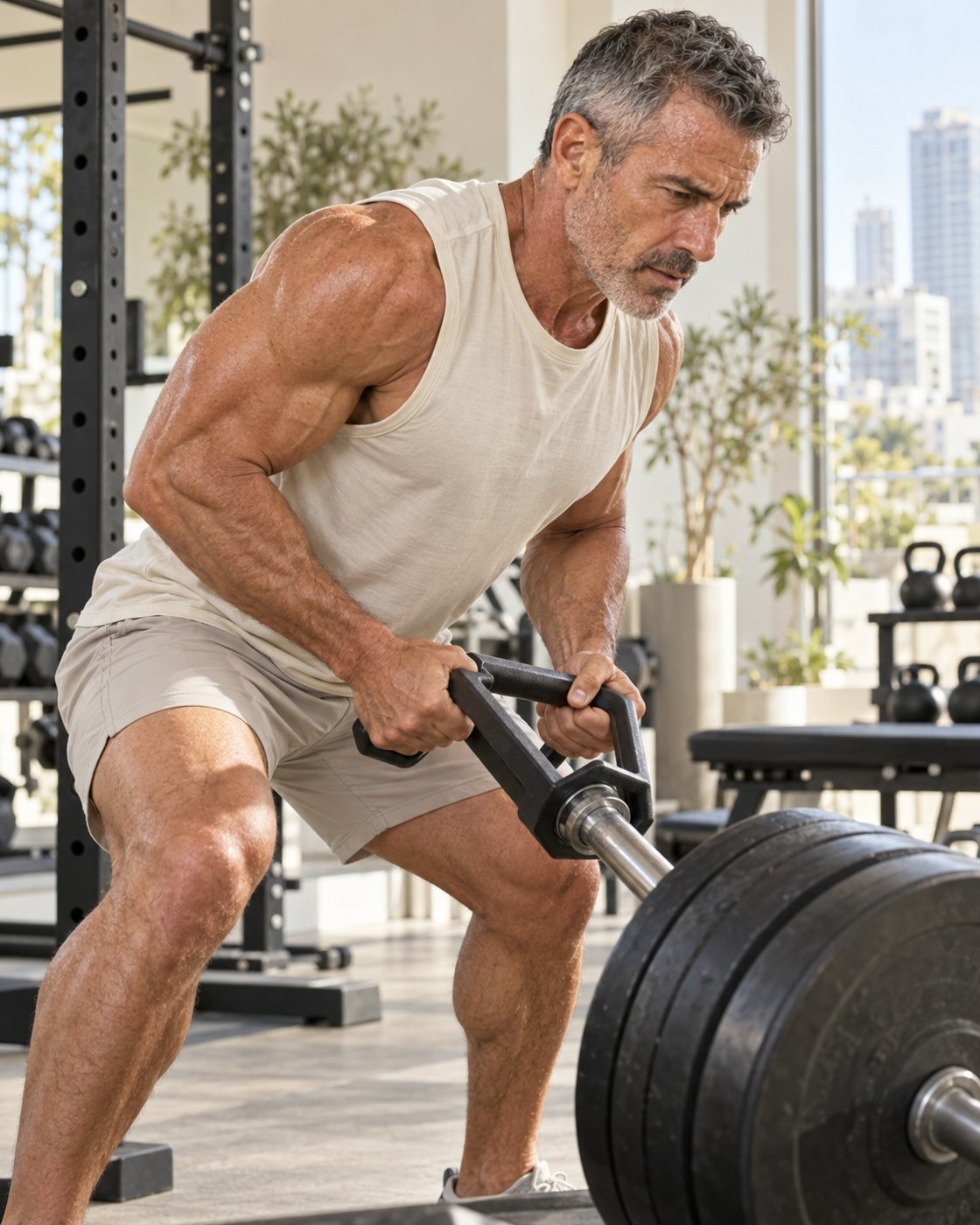
The more strength, endurance, balance and flexibility we have, the more reserve we have against illness or injury. Someone starting from zero may lose independence faster after a medical event. Building reserve is an investment in the future.
The right approach combines measurement with listening to the body. Numbers can help identify a trend, but they are not the person. It is worth asking how you feel, how you function, what has changed, what is easier and what is still hard. Combining data with personal experience leads to better decisions.
It is worth thinking in terms of a minimum effective dose. Instead of asking what the perfect plan is, ask what the smallest action is that you can do consistently and that will really change the situation. For one person it is a twenty-minute walk, for another two strength workouts a week, and for another going to bed earlier.
Leg strength
The ability to get up from a chair and climb stairs depends largely on leg strength. Simple exercises such as sit-to-stand, an adapted squat and step-ups can be a foundation, depending on your health condition.
There is no need to change everything in one day. You can choose two or three high-impact habits, define them clearly and track them. Once they become routine, add another layer. That is how you build a system that lasts over time instead of relying on motivation alone.
Periodic follow-up allows the plan to be adjusted. If a measure improves but the person feels worse, we need to understand why. If you feel great but the measures are getting worse, that also needs attention. The goal is to gather enough information to make a decision, without turning life into a laboratory.
Balance
Balance is a skill that can be practiced. Standing on one leg, walking along different lines, tai chi and reaction exercises can all be included. Anyone with dizziness or falls should get an appropriate assessment before challenging practice.
It is important to distinguish between prevention and treating an existing disease. Lifestyle is a powerful foundation, but it is not a substitute for diagnosis, medication or medical treatment when they are needed. A responsible longevity program knows how to work alongside medicine and to refer for evaluation when warning signs appear.
Environment strongly influences habits. The food at home, the people we meet, the place we train, working hours and the phone next to the bed - all of these can help or get in the way. A smart change in environment reduces the need for self-discipline and makes it easier to stay consistent.
Vision and hearing
Independence is affected by the senses. A decline in vision or hearing can affect driving, social connection, balance and confidence. Periodic checks and treatment can preserve function.
The connection between areas is a central part of the picture. Good sleep makes training easier, training improves insulin sensitivity, good nutrition supports recovery, and social connections support consistency. When several factors are combined, the result is sometimes greater than working on a single measure.
When there is pain, a chronic disease or medication, the pace and load need to be adjusted. Sometimes the right step is actually to start more slowly, get a professional assessment and build confidence. A plan that respects limitations can be more effective than an aggressive plan that leads to stopping.
Home and environment
Sometimes the best intervention is not biological but environmental: good lighting, grab bars, fewer obstacles and suitable shoes. Good environmental planning reduces the risk of falls and makes it possible to stay independent.
Age is also not a reason to give up on improvement. The body keeps its ability to adapt throughout life, even if the rate of progress changes. The right training, nutrition, sleep and learning can improve function even at an older age. The question is not whether progress is possible, but what the starting point is and what the right pace is.
Brain and daily function
Planning, memory and judgment are important for managing medications, finances, travel and schedules. When a decline appears, early identification makes it possible to build support and routines that extend independence.
Friends and transportation
Independence is not only the ability to be alone. It is also the ability to reach people and places. Transportation, community and friends who can help when needed are part of smart health planning.
Personal goals
For one person independence means playing with grandchildren, for another traveling abroad, and for another continuing to work. A good plan starts with the question of what matters to the person, and then builds the measures and practice around those goals.
Measuring function over time
Sit-to-stand tests, walking speed, grip strength and balance are examples of simple measures. Follow-up makes it possible to see change before it becomes a significant problem.
How to build a personal plan
A personal plan for independence and function starts with defining a clear goal. It is not enough to say 'I want to be healthy'. It is better to define what you want to improve: energy in the afternoon, the ability to climb stairs without stopping, focus at work, range of motion, uninterrupted sleep or a specific medical measure. A clear goal makes it possible to choose the right tools and check whether you are really making progress.
Next, we build a picture of the current situation: medical history, medications, relevant blood tests, sleep, nutrition, activity, pain, emotional state and family risk factors. There is no need to turn every person into a complex medical project, but it is important to know what already exists and what needs attention. A good foundation prevents unnecessary trial and error.
The next stage is prioritizing. It is usually right to start with the factors that offer the highest return: sleep, movement, strength, nutrition, metabolic balance and reducing smoking or excessive alcohol. Only once the foundation is in place can more advanced tools be considered. This approach is both more economical and easier to sustain.
Finally, a re-check point is set. Longevity is not a project with an end date but a system that is built and updated. The body changes, goals change and life changes. That is why a good plan includes a simple mechanism of checking, learning and adjusting - without drama and without changing direction every week.
Independence is not only the ability to do things on your own, but the possibility to keep choosing how to live.

What you can do this week
Choose one measure that you can track simply, and record it for seven days. It could be hours of sleep, number of steps, strength workouts, walking time, energy level or pain. The goal is to create a real starting point.
Schedule two fixed health actions in your calendar for the coming week instead of relying on free time. When an action gets a place in your schedule, the chance that it happens rises significantly.
Choose one change in your environment: prepare your workout clothes in advance, move the phone away from the bed, add vegetables and protein to your first meal, or schedule a walk with someone else. A small environmental change can be stronger than a big decision.
Decide in advance what will count as success. Success is not perfection. If the goal is three workouts and you did two, that is still progress. The goal is to build a streak that accumulates over time.
The Manheim Longevity Center approach
At Manheim Longevity Center we see longevity as a personal process that connects measurement, prevention, movement, nutrition, sleep, mental health, Chinese medicine, supplements as needed and community. The goal is not to promise eternal life, but to help people increase their chances of living more years in health, independence and high function.
A practical perspective
When focusing on independence and function, one of the most common mistakes is trying to change too many things at once. A more effective way is to choose one action, measure your ability to carry it out and check what happened after a few weeks. Then you can add another layer. This creates progress based on personal experience rather than momentary enthusiasm. It is also important to leave room for enjoyment: a plan that does not suit your personality, your family and your work routine will not last. The more natural the habits become, the less conscious effort they require. In the end, this is exactly the idea of practical longevity - building a life system in which the healthy choice becomes the easy, normal choice.
Frequently Asked Questions
What helps maintain independence in later life?
Maintaining strength, balance, walking ability, vision and hearing, along with adapting the living environment, may support everyday function. It is important to match activity to your medical condition and ability, and to address risk factors for falls and new difficulties in function.
When should I seek a functional assessment?
When falls occur, or there is new difficulty getting up from a chair, climbing stairs, walking or carrying out everyday activities, it is recommended to see a doctor or an appropriate professional. An assessment can help identify treatable factors and adapt a safe plan.
The information in this article is general and does not replace personal medical advice, diagnosis or treatment. People with underlying conditions, new symptoms or who take medication should consult an appropriate professional before making significant changes to their diet, training or supplements.